
Starting a Commercial Business in Cameroon as a Foreigner: What the Ministry of Trade Expects Before You Open
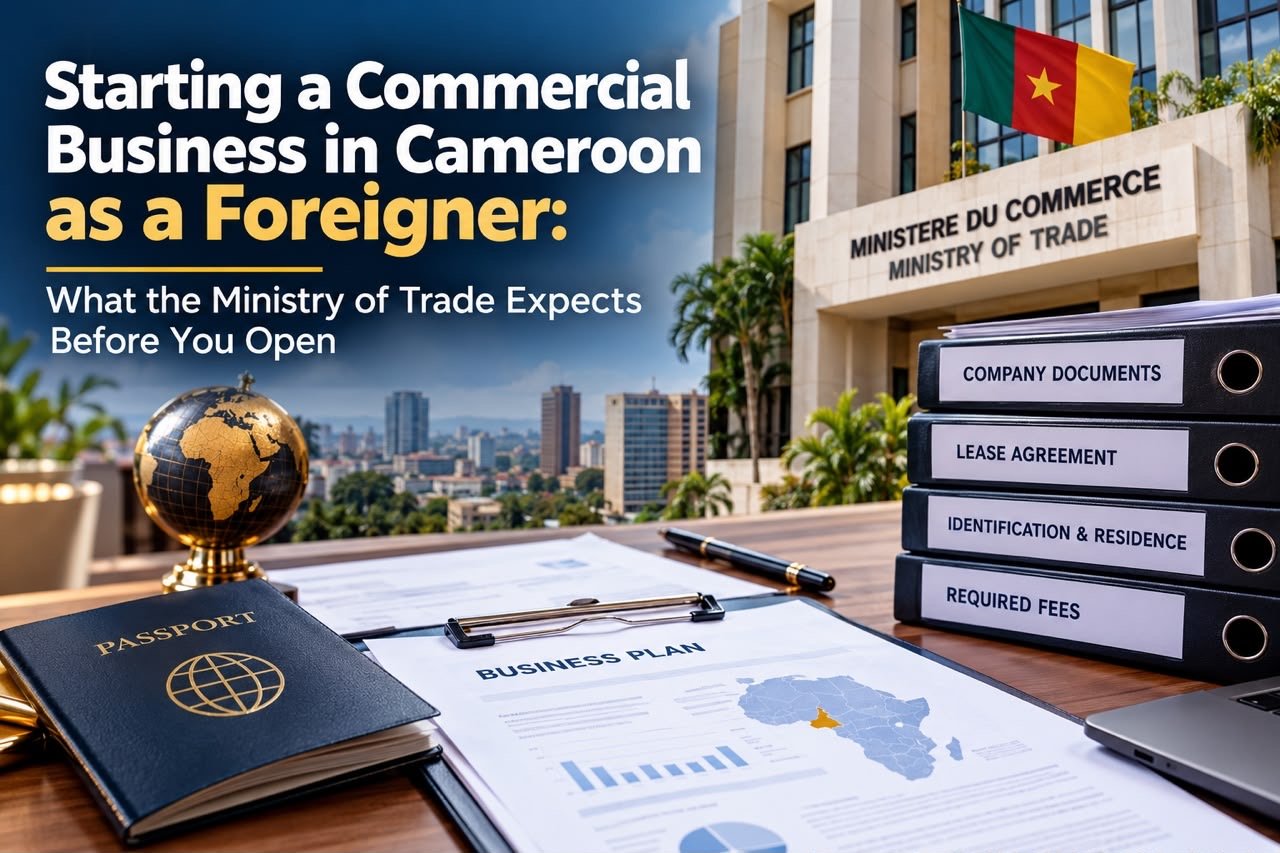
Over the past months, a good number of foreign entrepreneurs and investors have come to us with the same question: “Can I just register my business and start trading?”
The short answer is no. Under Cameroonian rules, a foreigner who wants to carry on a commercial activity must first obtain an approval (agrément) from the Ministry of Trade. Registration with the commercial registry and the tax authorities comes later, and in practice it does not replace this step. Many people only find out about the requirement after they have rented premises, signed contracts or even started operating.
Who is concerned
The requirement applies whether you plan to operate as an individual (personne physique) or through a company (personne morale). The Ministry publishes separate lists of required documents for each, and the lists are not the same.
The route also depends on your situation:
A new business. You are starting from scratch.
A business already operating. You registered, or started trading, without the approval and now need to regularise your position. The file is heavier, and the Ministry also looks at the period during which you traded without approval.
A branch of a foreign company. Additional corporate documents from the parent company are required, on top of those for a locally created company.
Choosing the wrong category at the start is one of the most common reasons files stall.
What the Ministry looks at
Without going through the full checklist, the file generally covers five areas:
Your identity and standing in Cameroon. This includes your residence status and your criminal record, and for a company, the same for its principal managers.
Your business plan. A detailed plan for the activity you intend to carry out in Cameroon, together with a location plan.
Your premises. Proof that you have a registered place of business, supported by a lease or title, and a postal box subscription.
Your corporate documents. For companies, the statutes and the proof of capital subscription and payment, prepared in the form the Ministry will accept. The form depends on the type of company.
Fees. An examination fee that varies according to the type of applicant and structure.
Each of these has conditions on form, validity and certification. A document that exists but is not in the required form will not be accepted. Statutes, for example, are treated differently depending on the legal form of the company, and the nature of the supporting documents changes if you are regularising rather than starting fresh.
Where applications commonly go wrong
From our experience assisting clients, the problems are rarely about a missing document. They usually come from:
Choosing a structure before checking how it affects the approval process.
Signing a lease that does not meet the Ministry’s requirements.
Preparing a business plan that is too general to be accepted.
Documents that expire while the file is being assembled.
Applying under the wrong category, which means starting again and paying again.
These are avoidable, but only if someone looks at the whole picture before the file is submitted.
How we can help
At Fonyam and Partners, we advise foreign investors and entrepreneurs on the right structure for their activity, prepare and review the approval file, coordinate the supporting documents, and follow the application through to a decision. For businesses already operating without approval, we assess the exposure and plan the regularisation.
If you are planning to set up a business in Cameroon, or you are already trading and are not sure your position is in order, we recommend a short consultation before you commit to premises, contracts or capital. It is far cheaper to settle these questions at the start.
To discuss your situation, contact Fonyam and Partners directly by message here on LinkedIn or through our office. Tell us briefly what you intend to do, and we will tell you which route applies to you and what you need to prepare.