
Environmental Compliance in Cameroon: Understanding Upcoming ESIA Public Hearings and Their Legal Boundaries
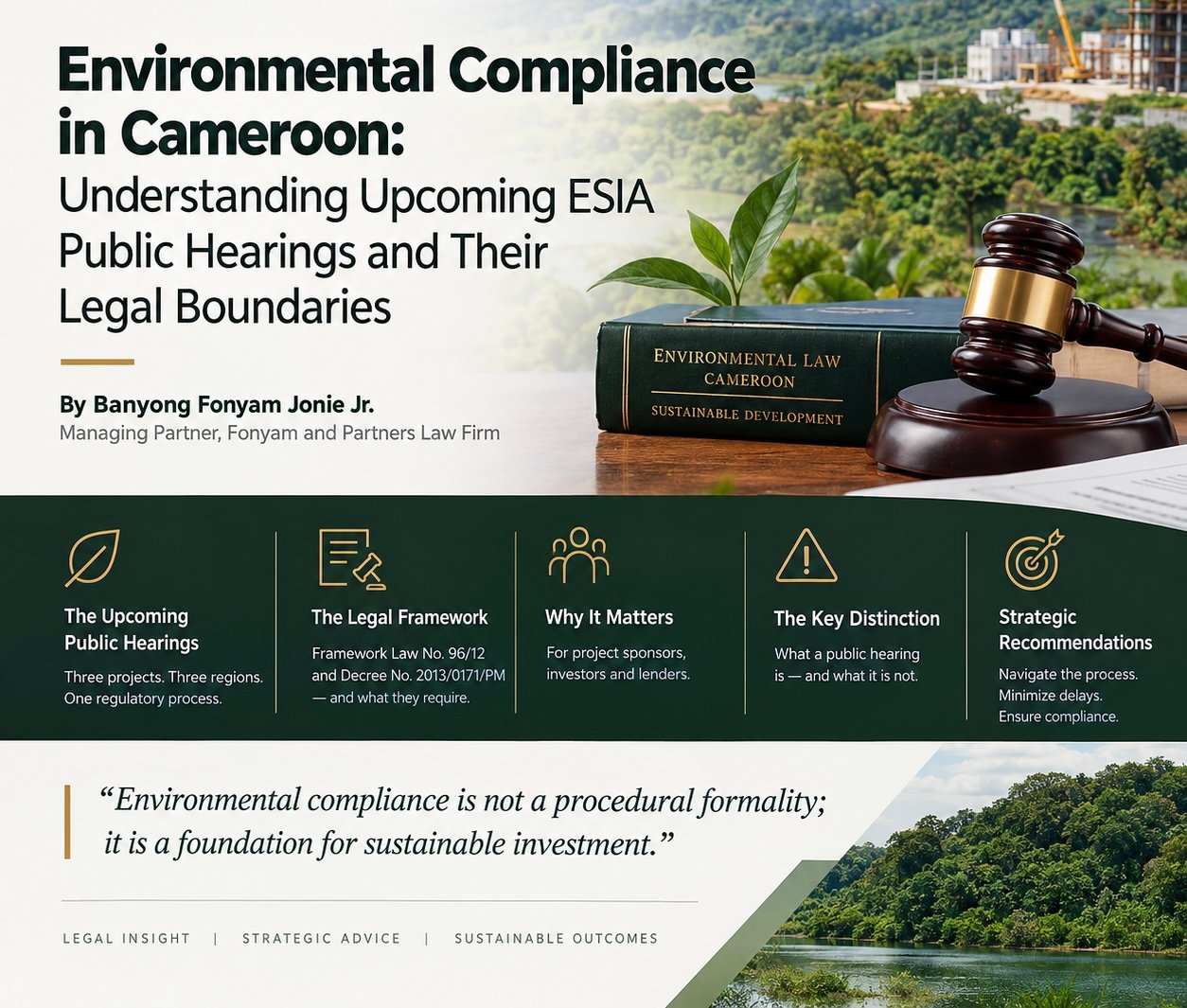
In the realm of infrastructure, energy, and industrial development, environmental compliance is not merely a procedural formality; it is a foundational pillar of sustainable investment. Recently, the Ministry of the Environment, Protection of Nature and Sustainable Development (MINEPDED) in Cameroon issued public notices dated 16 October 2026, scheduling public hearings for the Environmental and Social Impact Assessments (ESIAs) of three distinct projects.
At Fonyam and Partners, we recognize that understanding the nuances of these regulatory milestones is critical for sponsors, investors, and lenders alike. This article provides a legal overview of the upcoming hearings, the statutory framework governing them, and crucially,what these hearings do not legally establish.
The Scheduled Public Hearings
MINEPDED has scheduled public consultations for the following three projects:
1. LPG Storage and Filling Centre (Mendankwe, Bamenda I, North-West Region):
o Sponsor: Hydrocarbons Prices Stabilization Fund (CSPH-HPSF)
o Schedule: 26–31 October 2026, from 10 a.m. to 4 p.m.
o Venue: Bamenda I Council Hall
2. Industrial Granite Quarry (Balambo, Bangou, West Region):
o Sponsor: Beverly Hills Construction (BHC)
o Schedule: 26–31 October 2026, from 10 a.m. to 4 p.m.
o Venue: Balambo Chiefdom
3. Brewery and Mineral-Water Production (Moquo 2, Tiko, South-West Region):
o Sponsor: KRIEGER Brewery Company
o Schedule: 2–7 November 2026, from 10 a.m. to 4 p.m.
o Venue: Moquo 2 Chief’s Palace
The Legal Framework and Function of Public Hearings
The public hearing is a statutory mechanism designed to ensure transparency and stakeholder engagement. Under the Framework Law No. 96/12 of 5 August 1996 relating to environmental management, Section 9(e) establishes a fundamental principle of participation: decisions concerning the environment must be taken after consultation with the concerned sectors or groups.
This principle is operationalized through Decree No. 2013/0171/PM of 14 February 2013 on Environmental Impact Assessment. Specifically, Article 20 mandates public hearings to:
• Publicize the assessment documents;
• Record any opposition to the project; and
• Allow the public and interested stakeholders to submit observations and comment on the assessment’s conclusions.
These observations and any recorded opposition become a formal part of the administrative record of the ESIA process.
Why These Hearings Matter
The public hearing stage is a pivotal moment in a project’s lifecycle, with distinct implications for different stakeholders:
• For Project Sponsors: The success of this stage hinges on the quality and completeness of the ESIA, the robustness of the stakeholder engagement structure, and the sponsor’s ability to provide a documented response to issues raised. Unresolved objections can lead to regulatory delays, directly affecting the project’s critical path and timetable.
• For Investors and Lenders: The consultation record generated during these hearings is vital for due diligence. It informs the assessment of regulatory and timing risks. Furthermore, ensuring that the consultation process complies with local law is often a prerequisite for meeting international lenders’ Environmental and Social (E&S) requirements for project finance.
Critical Distinction: What a Hearing Does Not Establish
It is of paramount legal importance to clarify the limits of the public hearing. The holding of a public hearing does not, of itself, constitute final environmental approval or grant all other required administrative authorizations for a project.
A public hearing is a consultative and procedural step within the broader ESIA framework. It is not the final environmental permit. Sponsors must still navigate the subsequent statutory review processes to secure the requisite certificates of environmental compliance and other sector-specific authorizations.
Strategic Recommendations for Corporate Entities
For companies planning or operating industrial, extractive, energy, or infrastructure projects in Cameroon, proactive legal and regulatory mapping is essential. Fonyam and Partners advises corporate entities to:
1. Establish early in the project cycle which specific assessment procedures and authorizations apply.
2. Identify the exact scope of consultation required under Cameroonian law.
3. Integrate these regulatory milestones into the wider project timeline to mitigate unforeseen delays.
Conclusion
Environmental compliance in Cameroon requires a meticulous approach to stakeholder engagement and statutory procedures. Understanding the function and the limitations of the ESIA public hearing is the first step in securing a project’s social license to operate and ensuring long-term regulatory viability.