
THE CEMAC FINANCIAL STANDOFF: A CRUCIAL TEST FOR ECONOMIC SOVEREIGNTY
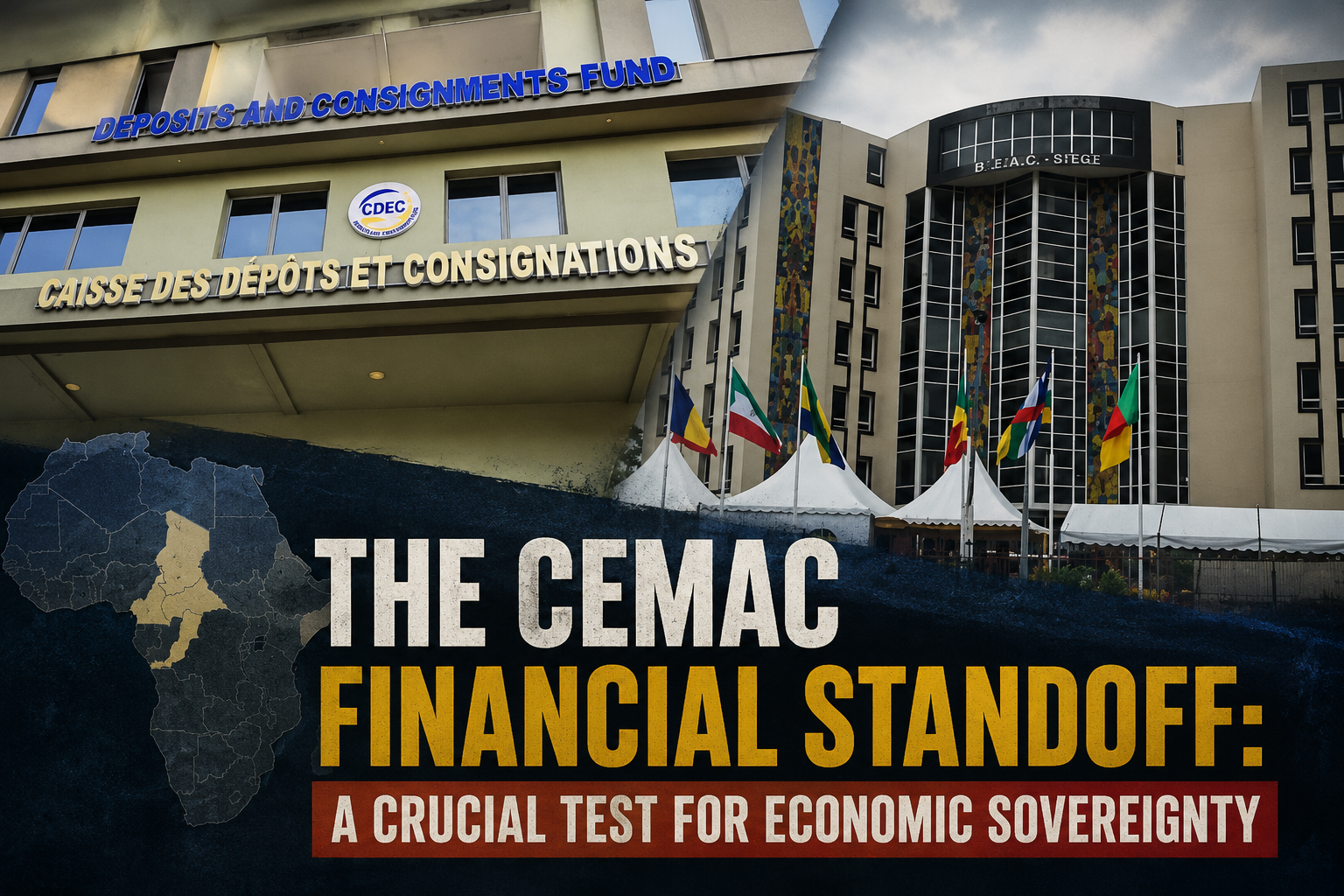
The tension between the Cameroon Deposits and Consignments Fund (CDEC) and the Central African Banking Commission (COBAC) has escalated beyond a simple regulatory disagreement. It has evolved into a high-stakes battle over the very definition of public finance and economic sovereignty within the CEMAC region.
In a decisive move, CDEC has officially declined to participate in consultations regarding two draft regulations proposed by COBAC. This boycott is not a procedural snub; it is a firm stance against what Cameroon views as an overreach by the regional banking regulator.
At the heart of this conflict lies a fundamental legal and institutional question: What is the true nature of a Deposit Fund?
COBAC seeks to classify the management of consignments, regulated deposits, and unclaimed assets as “banking operations,” effectively bringing CDEC under its prudential oversight. The CDEC, however, vigorously contests this classification, defending its unique status on three critical pillars:
1️⃣ A Public, Non-Banking Nature: The CDEC is not a commercial bank. It operates without private shareholders or standard share capital. It is a public interest tool, backed by the full faith and credit of the State, designed to serve national development agendas.
2️⃣ Unsuitable Prudential Regulation: The attempt to impose classic banking rules—such as liquidity ratios and capital requirements designed to absorb commercial losses—on a public entity is fundamentally incongruent with its operational model. Applying these constraints would stifle its ability to fulfill its public mission.
3️⃣ An Instrument of Economic Sovereignty: For Cameroon, these resources are strategic. They represent a long-term financing lever for public policies and infrastructure. To constrain them within a commercial banking framework risks diverting critical funds away from national priorities and undermining the country’s financial autonomy.
The dispute has now moved from the boardroom to the courtroom. The CDEC has taken the matter to the CEMAC Court of Justice in N’Djamena, seeking to annul the foundational texts of this reform.
While COBAC aims for an implementation date in 2027, the Court’s impending ruling will be decisive—not just for Cameroon, but for the entire sub-region. It will determine whether our financial institutions must be standardized under a strict banking regime, or whether we will preserve the unique status of Deposit Funds to stimulate public investment, following the models seen in Europe or the West African Economic and Monetary Union (WAEMU).
A Disappointing Silence from Regional Leadership
It is particularly concerning that neither the Conference of Heads of State—the supreme organ of CEMAC—nor the Council of Ministers has openly addressed or resolved this dispute. This silence is a glaring omission, especially given the multiple summits held since this standoff began. A dispute of this magnitude, between a State agency and a regional regulator, demands transparent political dialogue, not quiet indifference.
The future of regional integration depends on our ability to respect institutional nuances and sovereign prerogatives. Cameroon’s stance, and the legal battle that follows, is a defense of its economic sovereignty.
The verdict will set a precedent. Let us watch closely.