
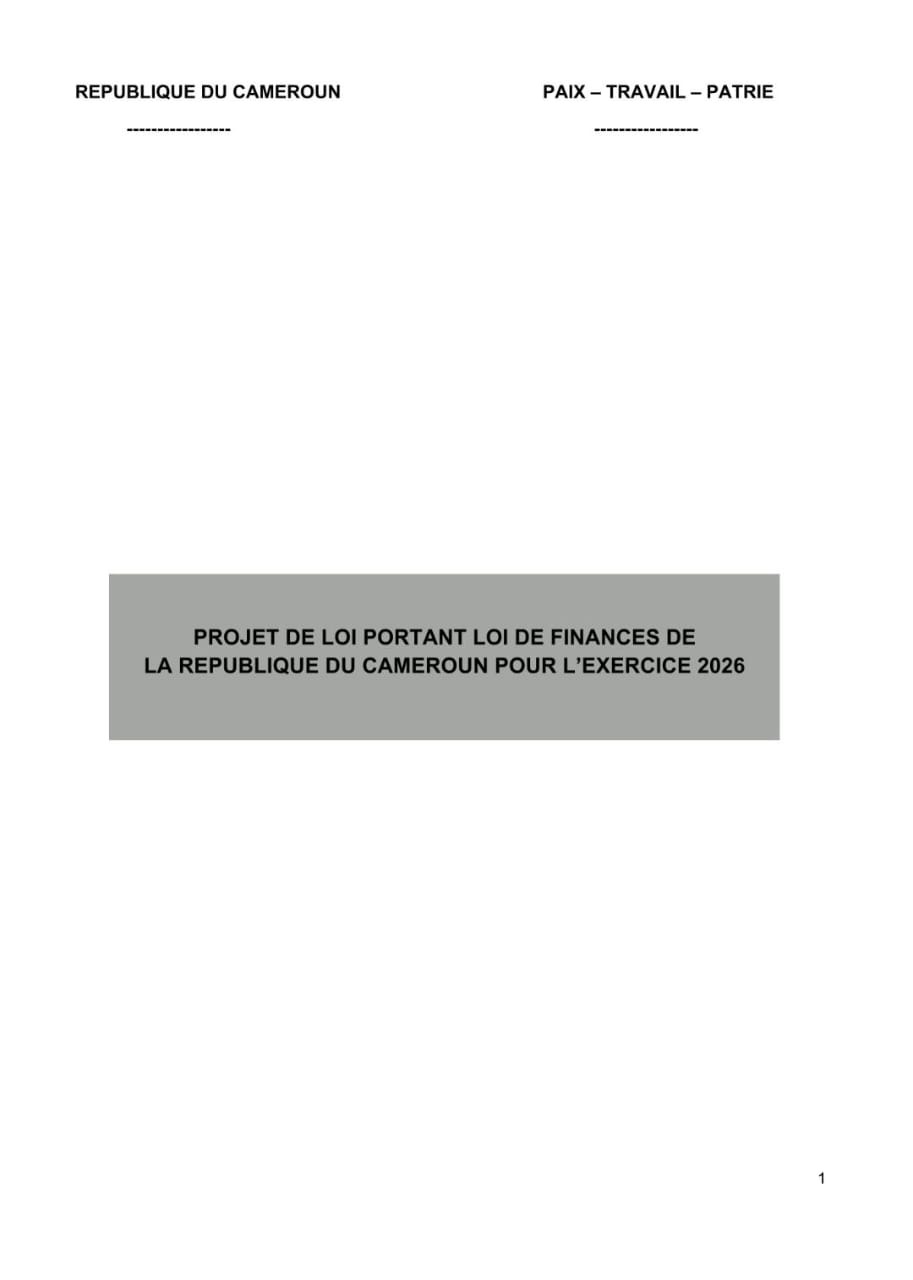
Cameroon’s 2026 Finance Bill – A Legal and Strategic Breakdown of the paradigm shift in Banking, Compliance, and Fiscal Enforcement .
Introduction
The 2026 Draft Finance Bill of Cameroon is more than a fiscal update—it is a strategic overhaul that places financial institutions at the forefront of tax enforcement. Currently before Parliament, this legislation redefines the role of banks from financial intermediaries to active fiscal agents of the state. In this analysis, we examine the profound operational, legal, and commercial implications for all stakeholders and provide actionable guidance for adaptation.
The Driving Force: Aggressive Revenue Mobilization
With a target to increase tax revenue by 7.6%—amounting to 4,827 billion FCFA—the government is deploying a paradigm-shifting strategy. Central to this approach is leveraging banks as real-time enforcers of customs and tax compliance, effectively turning them into extensions of the state’s revenue authority.
Four Transformative Shifts in the 2026 Finance Bill
1. Mandatory Escrow: Banks as Customs Guarantors
Banks will be legally required to block and escrow funds equivalent to customs duties for client payments to foreign suppliers deemed “at risk.”
– Impact: Banks become operational arms of customs, necessitating advanced risk-detection systems and real-time transaction monitoring. Importers must now plan for locked liquidity and delayed cash flow.
2. Escalated Liability: When Banks Become Liable
Non-compliance carries severe penalties:
– Refusal to Escrow: Banks may be classified as “parties interested in fraud,” exposing them to legal and reputational damage.
– Duty to Report: Banks must notify customs within 30 days if import declarations remain unregularized—failure to report triggers direct liability.
– Takeaway: Compliance is now a core business risk with direct corporate and executive accountability.
3. Banking Secrecy Eroded for Tax Investigations
Banking secrecy is formally relativized for tax and customs inquiries. Authorities gain direct access to client account details and beneficial ownership registers without client consent.
– Implication: While aligning Cameroon with global transparency standards, this shift fundamentally changes client-bank confidentiality and requires secure, legally sound disclosure protocols.
4. Capped Fees on Tax Payment Processing
Banks face strict limits on fees for processing tax payments—capped between 500 and 10,000 FCFA, with an absolute maximum of 10% of the transaction value.
– Strategic Insight: This move reduces taxpayer costs but pressures banks to handle state transactions near cost, potentially affecting profitability in high-volume service lines.
Strategic Implications & Actionable Recommendations
For Banks & Financial Institutions:
– Invest in Technology Immediately: Develop or upgrade systems to interface with customs APIs, automate escrow management, and flag “at-risk” transactions in real time.
– Elevate Governance & Training: Board-level oversight of compliance policies is essential. Intensive training for trade finance, operations, and compliance teams should begin now.
– Deepen Due Diligence: Strengthen KYC/KYB frameworks, particularly for clients engaged in import-export activities.
For Payment & Microfinance Institutions:
Though primarily targeting banks, the principles of enhanced monitoring and reporting may extend. Review cross-border transaction processes and prepare for stricter oversight.
For Importers & Businesses:
– Revise Financial Planning: Anticipate extended payment cycles and blocked liquidity. Ensure flawless customs documentation to expedite escrow release.
– Choose Banking Partners Wisely: Align with institutions that demonstrate robust compliance readiness and clear communication protocols.
For the Public & Broader Economy:
While aiming to boost state revenue for public investment, the law’s success depends on balanced implementation to avoid hindering legitimate trade. Public awareness and preparedness are crucial.
Conclusion: A Watershed Moment for Cameroon’s Financial Landscape
The 2026 Draft Finance Bill marks a decisive turn in Cameroon’s fiscal strategy—one that places unprecedented responsibility on financial institutions. For banks, this means higher operational costs, deeper integration with state systems, and significant liability exposure. For businesses, it signals a new era of tightened liquidity and compliance complexity.
Proactive adaptation is not optional; it is essential for legal resilience and commercial continuity. Stakeholders should begin strategic reviews now to ensure readiness upon promulgation.
Fonyam and Partners Law Firm offers specialized guidance in regulatory compliance, risk structuring, and stakeholder training to help your organization navigate this new landscape with confidence.
Prepared for clarity, impact, and strategic readiness.