
Unpacking Cameroon’s 60% Tariff Cut: Opportunities, Challenges, and the Path to Sustainable Growth.
By Banyong Fonyam Jonie Jr, Managing Partner, Fonyam and Partners Law Firm
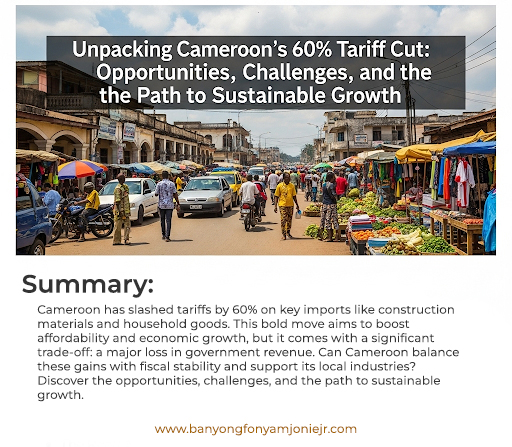
Cameroon’s recent 60% tariff reduction on key imports—ranging from public transport vehicles and construction materials to household goods—marks a significant shift in the country’s trade policy under the EU–Cameroon Economic Partnership Agreement (EPA). Since August 5, 2025, this bold move has aimed to make everyday essentials more affordable, stimulate business investment, and fuel economic growth. But what does this mean for everyday life, businesses, and the broader economy? And how can policymakers ensure these benefits are sustained without compromising fiscal stability?
The Immediate Impact: Affordability and Growth
The tariff cuts have already begun to reshape Cameroon’s economic landscape:
– Construction Sector: Builders now enjoy lower costs for cement, steel, and other materials, which could translate into more affordable housing and infrastructure projects.
– Household Goods: Items like washing machines, hygiene products, and tableware are more accessible, easing the cost of living for families.
– Trade Growth: Since the EPA’s inception in 2016, trade between Cameroon and the EU has grown by 33%, with CFA 250 billion in duty exemptions reducing input costs for local businesses.
These changes align with the EPA’s broader goals, including poverty reduction (through duty-free imports of pharmaceuticals, fertilizers, and computers) and boosting local production (via exemptions for industrial inputs like clinker and machinery).
The Fiscal Challenge: Balancing Growth and Revenue
However, the policy comes with trade-offs. As of May 2025, the government has foregone CFA 95.7 billion in revenue—a significant sum that underscores the need for careful fiscal management. While lower tariffs can spur economic activity, sustaining these benefits requires:
1. Diversifying Revenue Streams: Policymakers must explore alternative sources, such as broadening the tax base or improving collection efficiency, to offset lost customs duties.
2. Supporting Local Industries: Ensuring that tariff cuts do not undermine domestic producers is critical. Strategic safeguards, such as temporary protections for vulnerable sectors, could help maintain a competitive balance.
3. Monitoring Market Dynamics: Regulators should watch for price gouging or import surges that could destabilize local markets, ensuring that savings from tariffs are passed on to consumers.
Which Sector Stands to Gain the Most?
The construction industry is likely the biggest winner, given its reliance on imported materials like cement and steel. Cheaper inputs could accelerate infrastructure development and housing projects, addressing critical gaps in Cameroon’s urban and rural areas. Meanwhile, households and small businesses benefit from lower costs for essentials, freeing up income for other expenditures or investments.
The Road Ahead: Policy Safeguards for Long-Term Success
To maximize the EPA’s potential, Cameroon must:
– Invest in Complementary Reforms: Streamlining business regulations and improving logistics (e.g., port efficiency) can amplify the benefits of tariff reductions.
– Promote Local Value Addition: Incentivizing domestic production of goods like cement or machinery could reduce reliance on imports over time.
– Engage Stakeholders: Continuous dialogue with businesses, consumers, and EU partners will ensure the policy adapts to real-world needs.
Conclusion
Cameroon’s tariff cuts represent a bold step toward economic revitalization, offering tangible benefits for consumers and businesses alike. Yet, the true test lies in balancing these gains with fiscal prudence and industrial resilience. As legal and economic advisors, Fonyam and Partners remains committed to helping stakeholders navigate this evolving landscape—ensuring that growth is not just rapid, but sustainable.
What are your thoughts? How can Cameroon best leverage these tariff cuts while safeguarding its fiscal health? Share your insights in the comments!
For more information and legal counsel, contact us via:
Banyong Fonyam Jonie Jr.
Founding Partner | Fonyam & Partners Law Firm
📞 +237 675 859 695 | 📩 [fonyamlaw92@gmail.com]
“Legal precision unlocks investment potential.”