
A New Lex Monetaria: The Inevitable Transition to ISO 20022 and the Dawn of the Programmable Economy
By Banyong Fonyam Jonie Jr.Managing Partner, Fonyam and Partners Law Firm.
A seismic shift in the architecture of global finance is imminent. On November 22, 2025, the Society for Worldwide Interbank Financial Telecommunication (SWIFT) will execute a historic transition at its Brussels headquarters, retiring its legacy MT messaging standard and mandating the exclusive use of the ISO 20022 CBPR+ standard. This is not merely a technical upgrade; it is the foundational step in erecting a new, digital global monetary system. For financial institutions across Africa, and indeed the world, understanding and preparing for the legal and operational ramifications of this change is no longer a strategic advantage—it is a regulatory and commercial imperative.
The End of an Era and the Genesis of a New Financial Language
The discontinuation of the decades-old SWIFT MT format marks the conclusion of the paper-based financial era. In its place, over 11,000 banks and financial institutions across 200 countries will adopt ISO 20022—a rich, structured data language. This transition is meticulously scheduled:
· November 17, 2025: The ISO 20022 standard goes live.
· November 17–24, 2025: A critical period of global synchronization between European, Asian, and American financial markets.
· November 22, 2025: Full switch to ISO 20022-only messaging.
This new standard is fundamentally different. It is designed for the digital age, with native compatibility for blockchain technology and Central Bank Digital Currencies (CBDCs). It paves the way for a future where financial value and data flow together seamlessly, enabling unprecedented levels of automation, transparency, and efficiency.
The Legal and Operational Imperative for African Financial Institutions
For banks and financial service providers in West and Central Africa, and particularly for our clients in Cameroon, this transition presents both a significant challenge and a monumental opportunity. The shift to ISO 20022 necessitates a comprehensive review of:
- Internal Compliance and Operational Protocols: Institutions must ensure their internal systems, payment processing workflows, and compliance screening tools are fully reconfigured to interpret and leverage the enhanced data fields of ISO 20022.
- Counterparty and Correspondent Banking Agreements: Existing agreements must be scrutinized and amended to account for new data requirements, liability frameworks, and operational procedures under the new standard. Failure to do so could result in transaction delays, rejections, and strained banking relationships.
- Data Privacy and Governance: The richer data payload of ISO 20022 carries significant data privacy implications under regulations like Cameroon’s Law No. 2010/012 on cybersecurity and cybercrime, and the GDPR for cross-border transactions. A robust data governance strategy is essential.
The Blockchain Vanguard: Building the Future Financial Infrastructure
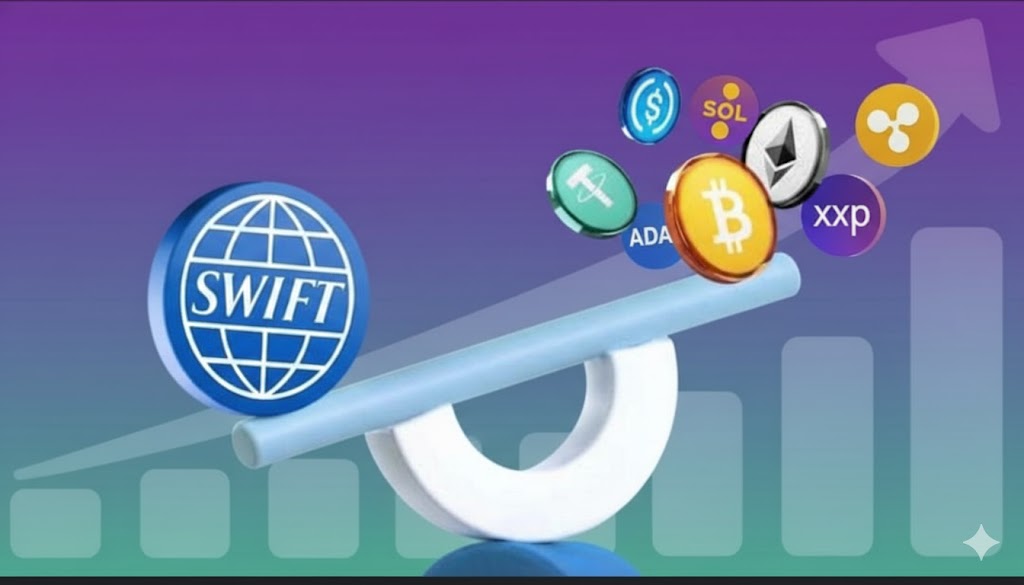
Crucially, the new SWIFT framework is not being built in isolation. It is being constructed with interoperability for distributed ledger technology (DLT) at its core. Several prominent blockchain platforms are already integrated, signaling the concrete convergence of traditional and decentralized finance:
· Ripple (XRP): Positioned for high-speed interbank settlements and CBDC payment systems.
· Stellar (XLM): Facilitating cost-effective cross-border transfers and stablecoin operations.
· Algorand (ALGO): Providing the foundation for asset tokenization and digital bonds.
· Hedera (HBAR): Enabling secure and verifiable corporate and government registries.
· Quant (QNT): Acting as a critical gateway, or overlay, between traditional banking infrastructure and multiple blockchains.
This integration is the harbinger of the next phase, anticipated by January 2026: the full-scale integration of CBDCs and tokenized assets. This will signal the unequivocal rise of a new digital monetary system—a “programmable economy.”
Conclusion: Navigating the Transition with Foresight
The paper-based era is ending. The programmable economy is beginning. This transition demands more than just technical upgrades; it requires strategic legal foresight. Financial institutions must proactively engage with legal counsel who understand both the intricacies of international financial regulation and the transformative potential of blockchain technology.
At Fonyam and Partners, we are positioned to guide our clients through this complex legal landscape. We stand ready to assist in navigating the contractual, regulatory, and strategic challenges of this new lex monetaria, ensuring that African institutions are not merely participants, but active architects in the future of global finance.